Let me be honest right away — chicken biryani is not just a recipe. It’s a mood. A whole afternoon vibe. The kind of dish that makes the house smell so good that people start “randomly” walking into the kitchen asking, “Bas aur kitna time?”
I still remember the first time I tried making it alone. I was confident. Too confident. Rice overcooked, chicken perfect, timing all wrong. Been there. But that’s how biryani teaches you — slowly, patiently. It’s not difficult… it just wants your attention for a while. Like a good friend.
This is not restaurant-style show-off biryani. This is home-style chicken biryani, the kind you make on Sundays, festivals, or when you just want comfort food with layers — literally layers. We’ll keep things simple, realistic, and forgiving. No chef drama. No fancy tools. Just real cooking, small mistakes allowed.
Trust me — if I can do this calmly now, you can too.
Quick recipe overview (the relaxed version)
So before we start chopping anything — here’s what you’re looking at.
You’ll need around 30 minutes to prep, mostly marinating and slicing. Cooking takes about 45–50 minutes, depending on your flame and patience level. This recipe feeds 4 hungry people, or 3 if everyone goes back for seconds (which they will). Difficulty? I’d say medium, but emotionally… very rewarding.
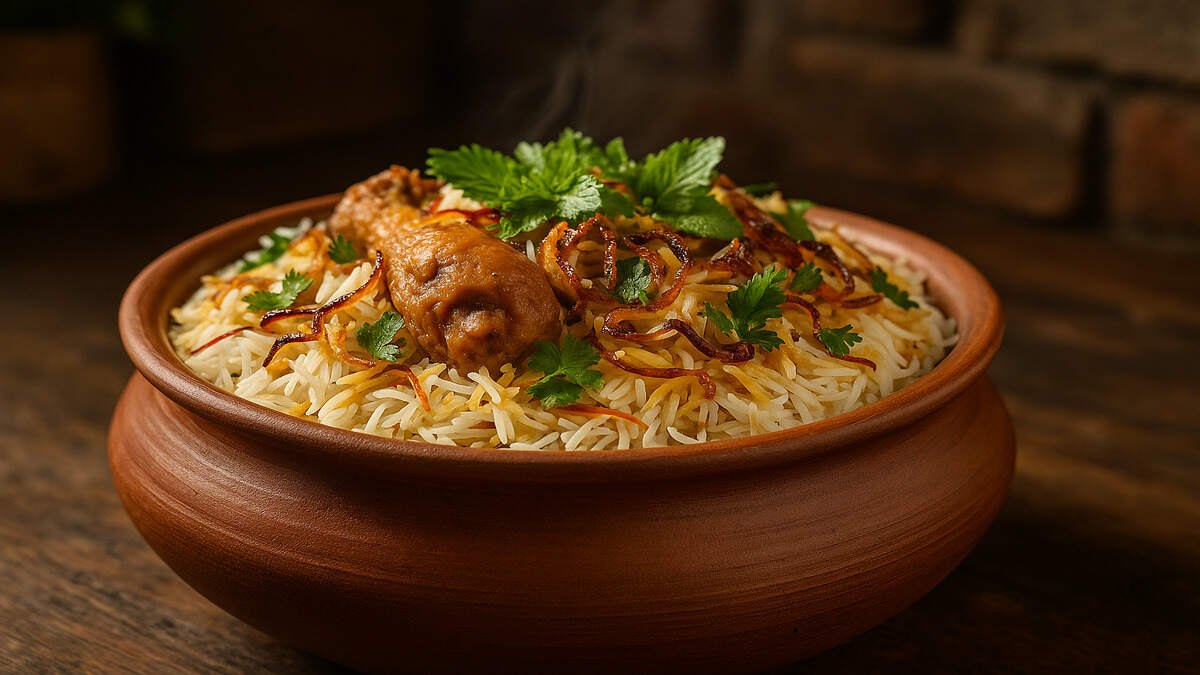
Chicken Biryani
Ingredients
Equipment
Method
Notes
Cold drink or lassi on the side — perfect.
Equipment you’ll actually need (nothing fancy)
You don’t need a restaurant setup. I promise.
A heavy-bottom pot or deep handi — this matters, don’t skip it.
One large bowl for marinating chicken.
A wide pan for cooking rice.
Basic stuff — knife, cutting board, spatula, ladle.
A tight lid or foil for dum cooking.
And yes… patience. That’s the invisible tool.
Ingredients (with real-life comments)
For the chicken marinade
750 grams chicken (bone-in works best, more flavor — trust me)
1 cup thick curd (not sour… please check)
2 tablespoons ginger-garlic paste
2 green chilies, crushed — adjust, don’t be brave unnecessarily
1 teaspoon turmeric powder
2 teaspoons red chili powder (less if you fear heat)
1 tablespoon coriander powder
1 teaspoon garam masala
Juice of half a lemon
Salt — enough to season properly, don’t be shy
A handful of chopped mint and coriander
2 tablespoons oil or melted ghee
Mix everything well. Really well. Use hands. Think about life while mixing.
Let it rest at least 30 minutes. Longer is better. Overnight? Magical.
For the rice
2½ cups basmati rice — aged if possible
Water — lots of it
2 bay leaves
4 green cardamom
4 cloves
1-inch cinnamon stick
Salt — water should taste like the sea (not joking)
For layering
3 large onions, thinly sliced
½ cup oil for frying onions (yes, it’s a lot — biryani is not diet food)
A pinch of saffron soaked in warm milk (optional but beautiful)
2 tablespoons ghee
Extra mint and coriander
A little rose water or kewra water — optional, but nostalgic
Cooking method (slow, messy, real-life flow)
Start with the onions. Always onions.
Heat oil in a pan and fry the sliced onions slowly. Medium flame. Stir often. They’ll first go soft, then golden, then suddenly dark — that moment matters. You want deep golden brown, not bitter black. Remove them onto a plate. Try not to eat half. I fail every time.
Now rice.
Wash basmati rice gently until water runs mostly clear. Don’t rub it like laundry. Let it soak for 20 minutes if you can. Meanwhile, bring a big pot of water to boil. Add whole spices and salt. When it’s rolling, add rice.
Cook rice till it’s 70% done. That’s important. Grain should break but still have bite. Drain immediately. Spread it out a little so it stops cooking. Relax. You’re doing fine.
Now the chicken base.
In a heavy pot, add a little oil or ghee. Add the marinated chicken — all of it. Spread evenly. No stirring yet. Cook on medium for about 7–8 minutes. You’ll see water releasing, oil peeking on sides. That’s your cue.
Lower the flame.
Now comes the fun part — layering. Think of it like building comfort.
On top of chicken, add a layer of rice. Sprinkle fried onions. Add mint, coriander, a few drops of saffron milk. Little ghee. Repeat one more layer. Finish with onions and herbs on top. Drizzle rose water if using.
Cover tightly. If lid is loose, use foil. This matters.
Cook on very low flame for 25–30 minutes. This is dum. Don’t open the lid every five minutes. I know you want to. Don’t.
After time’s up, turn off heat. Let it rest for 10 minutes. That resting… it completes the biryani.
Open lid. Smell hits first. Then gently mix from sides. Slowly. Respectfully.
You just made chicken biryani.
ALSO READ: Egg Biryani for Lazy Days and Hungry Nights
Variations and substitutes (because life happens)
If you want less spicy, reduce chilies and chili powder. Flavor stays.
For boneless chicken, use thigh pieces. Breast dries fast — sounds weird but true.
Vegetarian? Same method works with paneer, mushrooms, or mixed veggies. Marinate them gently. Shorter cooking time.
Trying lighter version? Use less oil, skip fried onions (it hurts, but okay). Flavor reduces, but still comforting.
Health benefits (keeping it real)
Chicken biryani isn’t health food. Let’s be honest. But it’s not junk either.
You get protein from chicken, energy from rice, and digestion help from spices like cardamom and cloves. Homemade biryani means controlled oil, clean ingredients, and no mystery stuff.
Eat mindfully. Portion matters. And balance it with lighter meals later. Done.
Approximate nutrition (very rough idea)
One serving gives good protein, decent carbs, moderate fats. Calories? Yes, there are calories. But they come with satisfaction. And that counts — at least emotionally.
Serving suggestions (my opinion, not rules)
Serve chicken biryani hot. Always.
On the side — cool raita with cucumber or onion. Maybe lemon slices. Simple salad if you want to feel balanced.
Cold drinks? Lassi works. Water works. Silence also works — people get busy eating.
Leftover biryani the next day… sometimes tastes even better. Just saying.
Storage, leftovers, reheating (important stuff)
Store leftovers in an airtight box in the fridge. Good for 2 days.
To reheat, sprinkle a little water, cover, and heat slowly. Microwave is okay, but stovetop is better. Don’t overheat or rice dries.
Freezing? Possible, but texture changes. I prefer fresh.
FAQs
1. Can I make chicken biryani without dum cooking?
Yes, but dum gives that final flavor. If skipping, cook chicken fully first, then mix rice gently. Still good — just different.
2. Why does my biryani turn dry?
Usually rice overcooked or too much heat during dum. Been there. Lower flame next time.
3. Can I use pressure cooker?
You can, but control is tricky. One whistle max after layering — honestly, pot method is safer.
4. Is marination really important?
Yes. Big yes. It’s where flavor starts. Don’t rush this part.
5. Which rice is best for chicken biryani?
Aged basmati. Long grains, fragrance. Makes a difference.
6. Can I reduce oil a lot?
You can reduce a bit, not too much. Oil carries flavor. Balance is key.
A friendly, real conclusion
So that’s my chicken biryani — not perfect, not fancy, but real. The kind you make when you want to slow down, stand in the kitchen, and let food do its thing. Don’t stress if it’s not restaurant-perfect the first time. Mine wasn’t either. Still isn’t, sometimes.
Cooking biryani teaches patience. And forgiveness. And that food doesn’t need perfection — it needs care.
Make it your way. Adjust. Taste. Learn.
And when someone asks, “You made this?”
Just smile.